
Last updated: November 14, 2026
Quick answer: most frameless shower glass problems can be sorted in 5 checks before any parts come off. Frameless shower glass installation issues usually come down to fit, hardware, or sealing. The fix is to trace the symptom back to one of those three causes before anyone blames the glass. This guide shows how to spot rubbing doors, uneven gaps, threshold leaks, sagging hinges, and seal problems. For broader context, see the hub page on frameless shower glass installation and fit and this guide’s section on seal checks.
Key Takeaways
- Start with clearance, hardware, and seal; you usually do not need a full teardown.
- A rubbing frameless shower door usually points to a small alignment shift, often under 1/8 inch, or settled hinges.
- Leaks in a frameless shower enclosure usually start at the threshold, the sweep, or an open gap.
- The hinges are likely the problem when the door drops, swings differently, or misses the latch without force.
If you need the broader framing on fit and installation, the hub page on frameless shower glass installation and fit sits alongside this guide.
Start with the symptom, not the glass
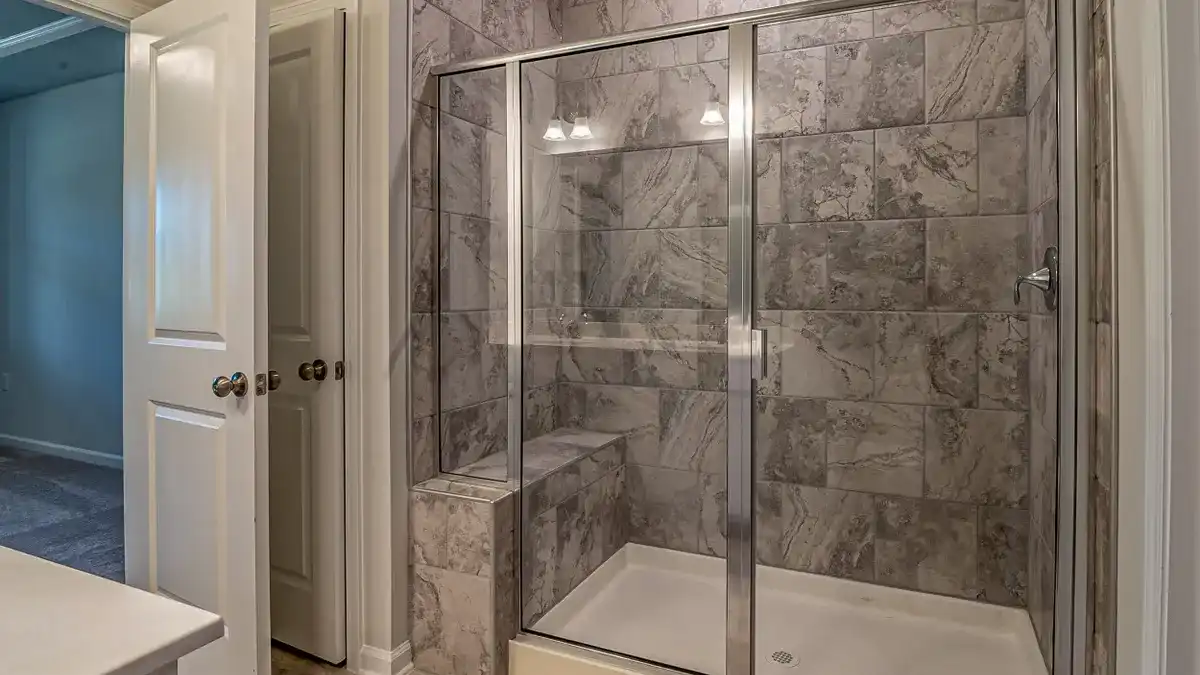
Start with the symptom, because the door drag, leak, or sag tells you where to look first. Picture this: the door drags on the tile, water shows up outside the curb, or the gap looks wider at the top than the bottom. You do not need a full teardown to start; you need a clean check of clearance, hardware, and seal.
Most frameless shower glass problems show up in one of three places. A door that rubs usually points to hinge position or a shifted panel. A leak at the threshold often points to sweep wear, slope, or missing silicone. A sagging door usually means the hinges or anchors are carrying more load than they should.
Use this quick sorting check before you call anyone:
- If the door touches tile, look at hinges, shims, and the hinge side gap.
- If water escapes at the bottom, inspect the sweep, threshold, and silicone bead.
- If the top gap changes from one side to the other, suspect sagging hinges or an out-of-plumb wall.
- If the door closes hard or bounces open, check the latch alignment and stop position.
A frameless shower door should have even spacing, clean swing, and a seal that meets the floor without scraping. A gap that changes by more than a sliver across the opening is a clue, not a cosmetic issue.
Why is my frameless shower door rubbing?
A rubbing frameless shower door usually means the door is out of alignment by a small amount, often less than 1/8 inch, or the hinges have settled under load. The problem is rarely the glass itself; it is usually the hardware or the wall behind it.
Here’s the catch: a door can rub at the top, the latch side, or the bottom, and each location points to a different cause. Top rub often means the door has dropped slightly. Bottom rub often means the panel was set too low or the threshold was not leveled correctly. Side rub can mean the hinge stack is tight, the wall is not plumb, or the panel moved before the silicone cured; if that is not clear, consult a professional.
Follow this order:
- Open the door halfway and look at the gap along the hinge side and latch side.
- Close the door slowly and note exactly where it touches first.
- Check whether the gap narrows by the same amount from top to bottom. A change of even a few millimeters matters.
- Look at the hinge screws, wall anchors, and any visible shims for movement or compression.
- If a sweep is installed, see whether it is dragging on the tile instead of just meeting it.
Do not trim the sweep first. That only hides the symptom and can turn a light rub into a bigger leak.
What causes leaks in a frameless shower enclosure?
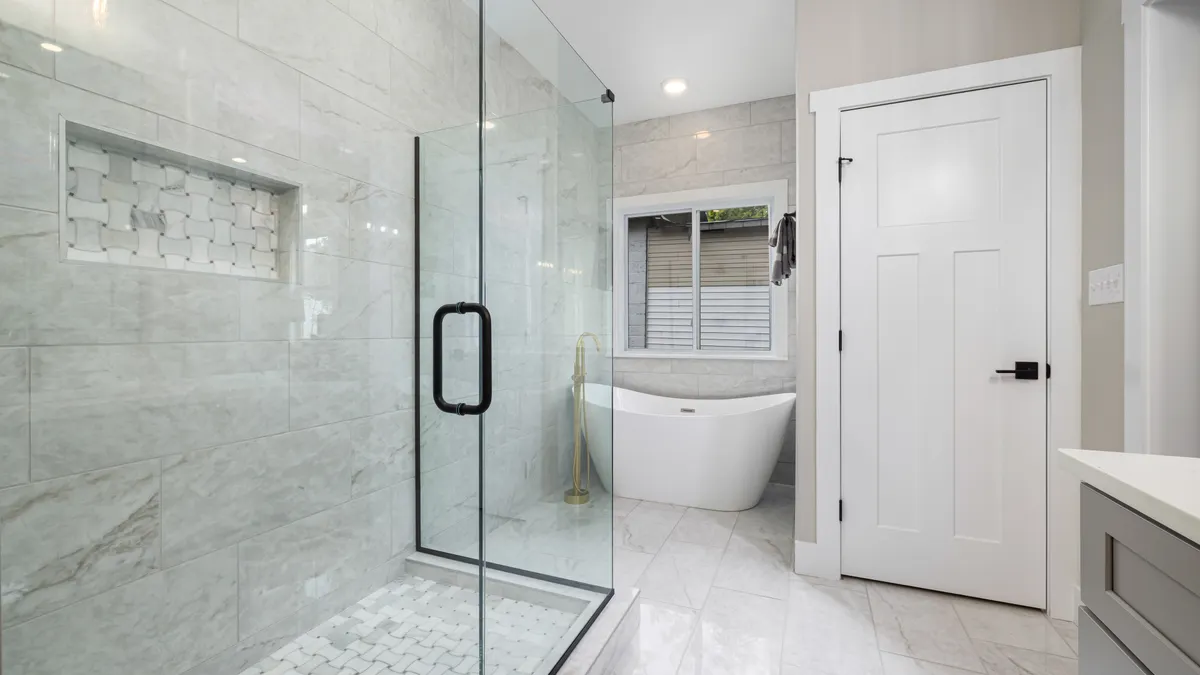
Leaks in a frameless shower enclosure usually come from the threshold, the sweep, or a gap that is too open for the chosen seal. Water does not need a big opening; a small path at the bottom edge is enough.
Not every leak means the glass is wrong. A shower floor that slopes away from the opening can send water toward the bathroom. A threshold with a flat or backward pitch can do the same. A missing or loose silicone bead can let water creep under the glass even when the door itself looks fine. For layout basics, see the symptom check above.
Check these common leak points:
- Threshold pitch: Water should move back into the shower, not toward the room.
- Door sweep: If the vinyl is torn, curled, or too short, it will miss the floor.
- Side seal: A strip that has shrunk or split can leak during a spray hit.
- Silicone line: A gap in the seal under the fixed panel gives water a path.
- Door closure: If the door does not land squarely, water will find the opening.
One bad habit causes a lot of confusion: people blame the shower head and forget the bottom edge. A strong spray can reveal a weak seal, but the seal is still the weak point. If the leak appears only during heavy spray, that still counts as a fit or sealing problem.
How do I tell if the hinges are the problem?
The hinges are the problem when the door drops, swings differently than it used to, or no longer lines up with the latch without force. A frameless door puts real weight on two small hinge points, so even a slight shift matters.
A sagging hinge usually shows up as a top gap that gets tighter on the latch side and wider on the hinge side. The door may also scrape at the bottom before it closes fully. If the hinge screws are loose, the issue can worsen fast. If the wall anchor area is weak, the hinge may tighten for a while and then drift again. For a second check, compare the door line with the threshold and sweep.
Look for these signs:
- The door closes with a scrape instead of a clean swing.
- The latch meets too high or too low.
- The door settles after opening and closing a few times.
- You see cracked silicone around the hinge cutout.
- The top edge sits unevenly compared with the fixed panel.
A hinge issue is not the same as a seal issue. Replacing a sweep will not always cure a sagging door; if the door still drops or misses the latch, consult a professional. Tightening a latch will not fix a wall that is no longer holding the hinge square.
What the seal should look like when it is right
A good seal on frameless shower glass should touch where it needs to touch and leave space where it needs to move. That means a door sweep that reaches the threshold without folding, a silicone bead that bridges the joint cleanly, and no hard pinch points that force the door out of line.
Picture this: you are standing outside the shower and looking at the bottom edge in daylight. The sweep should look straight, not twisted. The silicone should be continuous, not dotted or smeared. The threshold should give the water a path back inside the shower, not out to the bath floor. For seal details, compare this section with the leak checklist.
A seal problem often starts small. The vinyl hardens, the bead cracks, or the door settles by a few millimeters and leaves a gap that was not there before. Once that happens, the fix is not cosmetic. The seal has to match the actual position of the glass.
Use this simple check:
- Run a visual line along the sweep.
- Look for a continuous bead of silicone under fixed glass and at the threshold.
- Watch for light showing under the door when it is shut.
- Check that the seal is pressing lightly, not forcing the glass upward.
- Make sure the door can still swing free without rubbing the sweep.
A seal that is too tight can create a new problem. It may stop water for a week and then pull the door out of alignment. That is a bad trade.
Troubleshooting order that saves time and money
Use a fixed troubleshooting order for frameless shower glass problems so you do not pay for the wrong adjustment. Start with the simplest visual clues, then move to hardware, then sealing. That order keeps a small problem from becoming a second repair.
Use this order every time:
- Close the door and note the exact symptom: rub, leak, sag, or uneven gap.
- Measure the visible gap at the top and bottom. A change of even 1/8 inch tells you the door is out of square.
- Inspect the hinges for loose screws, shifted plates, or movement at the wall.
- Check the threshold slope and the sweep for wear, drag, or gaps.
- Look at the silicone bead for breaks, bubbles, or separation from the tile.
- Run the shower briefly and watch where water escapes first, not where it ends up.
The order matters because one symptom can hide another. A door that leaks and rubs may have both a sagging hinge and a worn sweep. Fixing the sweep first may make the leak quieter, but it will not stop the door from dropping.
A bad job often leaves three signs behind: uneven glass lines, hard-to-close latches, and sealant smeared where it should have been tooled cleanly. If you see all three, the issue is bigger than a quick touch-up.
What to ask a contractor before work starts
A frameless shower glass contractor should be able to explain whether the issue is fit, hardware, or sealing before any parts are removed. That first conversation can save a return visit.
Ask these questions:
- Is the problem caused by the wall being out of plumb, the hinge position, or the seal?
- Will the fix change the door swing or just correct the gap?
- If silicone needs to be replaced, ask the sealant manufacturer or a professional how long it should cure before the shower is used.
- If a sweep is changed, will it be trimmed to fit the actual threshold slope?
- If the door is sagging, is the glass still set in the right position, or does the whole assembly need to be reworked?
This is where a cheap quote can turn expensive. A quick “replace the seal” answer is not useful if the hinge is already out of line. You want the cause named, not guessed.
For local climate and building conditions, the answer can change. Humid bathrooms, tile that was installed out of level, and older homes with walls that are not plumb all change the setup. A contractor who ignores those conditions may leave you with the same leak after the fix.
What a bad frameless shower glass job looks like
A bad frameless shower glass job usually shows itself within days, not years. The door may scrape, the sweep may drag, the latch may miss, or the silicone may pull away from the tile line.
A few red flags stand out fast:
- The door needs a push to close.
- The gap is visibly wider at one end.
- Water exits at the threshold during normal use.
- The hinges look tight but the door still sags.
- Sealant is uneven or already splitting.
A clean installation has even lines, light but consistent contact at the seal, and a door that swings without force. If the opening changes shape every time the door moves, the underlying fit was not set correctly. For a quick cross-check, compare this section with the troubleshooting order above.
If you are sorting whether the issue is fit or damage, this guide gives the diagnosis side. The hub on frameless shower glass installation and fit can help place the problem in the bigger layout.
Why is my frameless shower door rubbing?
A frameless shower door rubbing usually means the door has shifted by a small amount, the hinges have settled, or the wall is not plumb. The rub point tells you where the problem sits. If it rubs at the bottom, the door may have dropped; if it rubs at the latch side, the hinge alignment may be off.
What causes leaks in a frameless shower enclosure?
Leaks in a frameless shower enclosure usually come from the threshold, the sweep, or a break in the silicone line. A poor slope on the shower floor can also send water toward the room. If the leak appears at the bottom edge first, that is a useful place to start.
Why does a frameless door sag?
A frameless door sags when the hinges, anchors, or wall support no longer hold the glass square. The door then drops a little at the latch side and starts to scrape or miss the strike point. Loose screws, weak wall backing, or a heavy door on undersized hardware can all cause that drop.
Drafted with AI; not yet reviewed by a person.


[…] mark into a wider visible line. A second mistake is trying to guess from one angle only; frameless shower glass can hide or exaggerate marks depending on the light. Side lighting gives a better read than […]