
Last updated: November 12, 2026
Key Takeaways
- Use framelessglassguide.com to compare glass thickness, hardware, and safety needs for showers, balustrades, or partitions.
- Start with the project type, then check the details that change the result.
- Check glass type, thickness, and support first.
- Frameless glass looks clean because the frame is gone, not the physics.
framelessglassguide.com is the place to start if you need a plain-English guide to framelessglassguide.com choices, fit, and installation basics. Quick answer: start here if you want a first-pass comparison of frameless glass options, but treat it as a planning tool, not a substitute for a site survey or code check. The sections below settle what to look for, what to ignore, and when a frameless glass project needs a pro.
What framelessglassguide.com is for
framelessglassguide.com is best used as a starting point for planning a frameless glass project before you price parts or call an installer. If you are sorting out shower panels, balustrades, or partitions, the site’s job is to help you compare glass thickness, hardware, and safety requirements without getting lost in sales copy.
That matters because frameless glass is not one-size-fits-all. A 10 mm shower screen and a 12 mm balustrade panel solve different problems, and the wrong hardware can turn a clean design into a rattle-prone one. The site should help you ask better questions before you buy.
Here’s the catch:
- Check whether the page is talking about showers, railings, or interior partitions.
- Look for mentions of safety glass standards, fixing methods, and edge treatment, and consult a professional if those details are unclear.
- Treat any “fits all spaces” claim with caution unless the page names exact dimensions, and ask a fitter or supplier to confirm.
- Use the guide to narrow the job, then confirm details with a fitter or supplier.
A good frameless glass guide saves time by stopping bad assumptions early. A weak one only repeats that glass looks modern.
For broader product context, see the frameless glass guide and glass types.
How do I use the site without getting lost?
You use it by working from your project type first, then by checking the details that change the final result. That means starting with the room or structure, not with a pretty photo.
Picture this: you are trying to choose between a shower screen and a fixed glass panel for a small bathroom. The page you want should tell you which measurements matter, which hardware is typical, and where the risks usually show up. Not every page on a glass site will do that well.
The best way to read it is usually to:
- Identify the project type.
- Confirm the glass thickness mentioned on the page.
- Look for the fixing style: floor channel, wall clamps, hinge, or top support.
- Check whether the article mentions safety glass or a standard such as EN 12150 or BS 6262.
- Decide whether the advice is general or specific enough for your space.
If a page never mentions a standard, a thickness, or a fixing method, it is not ready to guide a purchase. That is a weak page, even if the writing sounds polished.
You can also compare it with a shower glass guide or a balustrade glass guide when the project type is already known.
What should a beginner check first?
A beginner should check glass type, thickness, and the support system before anything else. Those three things decide most of the cost, the look, and the safety profile.
The truth is, frameless glass fails in practice when the support is vague, not when the glass looks plain. A 10 mm panel with poor anchoring is a bigger risk than a simpler design with proper fixings. Start with the structure. Then worry about appearance.
Use this short checklist:
- Glass type: tempered / toughened safety glass is the usual baseline.
- Thickness: the page should name the thickness, not just call it “heavy-duty.”
- Fixings: hinges, clamps, channels, or brackets should be stated clearly.
- Edge finish: polished edges matter for handling and appearance.
- Cleaning access: a design with fewer traps for soap and limescale is easier to keep clear.
If the site is vague on any of those points, keep reading but do not make assumptions. That is where many DIY mistakes begin.
For the maintenance side, a glass care guide can help once the specification is fixed.
Why does safety matter so much with frameless glass?
Safety matters because frameless glass gets its clean look by removing frames, not by removing physics. The panel still has weight, still needs proper support, and still has to meet the right safety standard for the job.
For a shower or partition, the page should ideally point you toward tempered safety glass and explain why the thickness and fixings match the use. For railings or balustrades, the standard becomes even more important, because the panel is not just a screen — it is part of a barrier system. If the site skips standards altogether, that is a warning sign.
Two authoritative places to sanity-check the basics are the British Standards Institution and the Health and Safety Executive. Those bodies are not there to pick your style, but they do help you verify that the project is being framed as a safety job, not just a décor job.
Watch for these red flags:
- “Any glass will do” language.
- No mention of toughened or laminated safety glass.
- No explanation of how the panel is anchored.
- Advice that ignores local building rules.
If you are dealing with stairs, balconies, or other fall-risk areas, a professional check is the sensible move.
See also the safety glass standards page and the installation checklist.
How much detail should a good guide give?
A good guide gives enough detail to make the next step obvious, but not so much that it pretends every room is the same. The useful version names measurements, shows where tolerances matter, and says when a site visit is needed.
Picture this: you are comparing two frameless shower options and one page gives you exact glass thickness, hinge style, and cleaning advice, while the other only says “modern and elegant.” The first page is actually helping you buy. The second one is decorating the page, not the project.
The details that matter most are:
- Panel height and width limits.
- Whether the glass is fixed or moving.
- The type of hinge or clamp.
- Whether the layout needs a return panel.
- Any notes about wall straightness or floor slope.
If a page explains those items, it is useful. If it only talks about “sleek style,” you still do not know whether the install will work.
That is the line.
For pricing context, compare it with a frameless shower pricing guide before you commit.
What does framelessglassguide.com probably leave out?
It probably leaves out site-specific measuring, local code interpretation, and the final quote details that only a supplier or installer can provide. That is normal for a guide site, but it is also the limit of what you should expect from it.
A general guide cannot tell you whether your wall is plumb, whether your floor falls enough for drainage, or whether your opening can take a certain hinge load. Those are installation questions, not reading questions. And if you need a custom cut, a site measure matters more than any article.
Keep the gap in mind:
- The site can explain terms.
- It can help you compare options.
- It cannot verify your room.
- It cannot replace a compliant installation check.
That is not a flaw. It is the boundary between learning and buying. If the site tries to act like a surveyor, that is when you should back away.
You may also want to check a custom glass panel guide before requesting a quote.
The Verdict: who should start here, and who should skip it?
framelessglassguide.com is a good starting point for homeowners, renovators, and designers who need to understand frameless glass before talking to a supplier. It is not the right place to stop if the project involves load-bearing glass, a stairwell, or any build that depends on code compliance.
Choose framelessglassguide.com if you need plain-English help deciding between glass thickness, fixing styles, and project types. Choose a qualified installer or supplier first if your opening is irregular, your panel is structural, or your local rules are already in play. Neither if you want a finished price without measurements or a survey.
That is the clean call. Use the guide to get informed, then move to a specialist when the project stops being general.
FAQ
Is framelessglassguide.com for beginners?
Yes. It is most useful for beginners who need the basic terms and choices explained without jargon. If you already know the difference between tempered glass and a fixed panel system, you may only need it as a refresher.
Can I use the site to size a custom panel?
Not by itself. A custom panel needs room measurements, wall checks, and a decision about fixings, which a general guide cannot confirm. Use the site to understand the options, then get a proper measure before ordering.
Does frameless glass always mean more expensive?
Not always, but it often needs more precise hardware and better installation than framed glass. The cost depends on thickness, opening size, and the fixing system, so the same look can land in very different budgets.
Is frameless glass safe in bathrooms?
Yes, when it is specified and installed as safety glass with the right support. That means toughened or otherwise suitable safety glass, proper fixings, and a layout that fits the room. If a page skips those parts, it is not giving enough detail.
What should I do after reading the site?
You should compare your project notes against a supplier or installer’s advice. Bring the opening size, the room type, and the style you want, then ask how the glass will be supported and what standard applies.
Drafted with AI; not yet reviewed by a person.

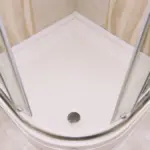
[…] Answer: Most frameless shower glass leaks are caused by one of 4 issues: door sweep gaps, bad threshold slope, misaligned glass panels, […]