

Last updated: November 15, 2026
Quick answer: Most frameless shower glass stains can be removed in 2 to 3 gentle rounds with white vinegar, a glass-safe cleaner, and microfiber cloths if the marks are residue from hard water or soap scum rather than etching. White vinegar, a glass-safe cleaner, a microfiber cloth, a squeegee, and a pumice-free cleanser are the right tools for most jobs. The steps below show what to try first, what to skip, and how to tell a stain from etching.
Key Takeaways
- Most cloudy marks on shower glass are mineral deposits or soap film, not permanent damage.
- Start with the mildest method: rinse, dry, then use vinegar or a glass-safe cleaner.
- If the mark feels rough or stays after several rounds, it may be etching, not a stain.
- Abrasive pads, razor blades, and gritty powders can make the glass look worse.
- A squeegee after each shower cuts down new buildup fast.
What frameless shower glass stains are, and what they are not
Frameless shower glass stains are usually mineral buildup, soap scum, or hard water spots that sit on the surface. If the glass feels smooth and the haze changes after cleaning, you’re probably dealing with residue, not damage.
Here’s the catch: people call a lot of different problems “stains.” A white ring from dried water, a dull film from body wash, and a cloudy patch from years of minerals are not the same thing. A stain often responds to an acid like white vinegar or a glass-safe cleaner. Etching does not.
A useful test is simple. Put a drop of vinegar on the spot for 2 to 3 minutes, then wipe with a microfiber cloth. If the mark softens or disappears, it was buildup. If it stays dull and rough, the glass may be etched. For safer cleaning guidance, see the EPA’s indoor cleaning recommendations and The American Cleaning Institute.
Look for these clues:
- Residue wipes or improves with vinegar.
- Hard water spots look like tiny rings or spots after drying.
- Soap scum feels waxy or greasy.
- Etching often looks like a permanent haze and does not wipe away.
The truth is, the fix depends on what you see, not just what it looks like from across the bathroom. That matters because the wrong tool can turn a cleanable spot into a permanent-looking mess.
For a broader care routine, this page sits under the frameless shower glass cleaning and maintenance hub. You can also see the related glass cleaning guide and maintenance steps.
How to remove hard water spots from frameless shower glass
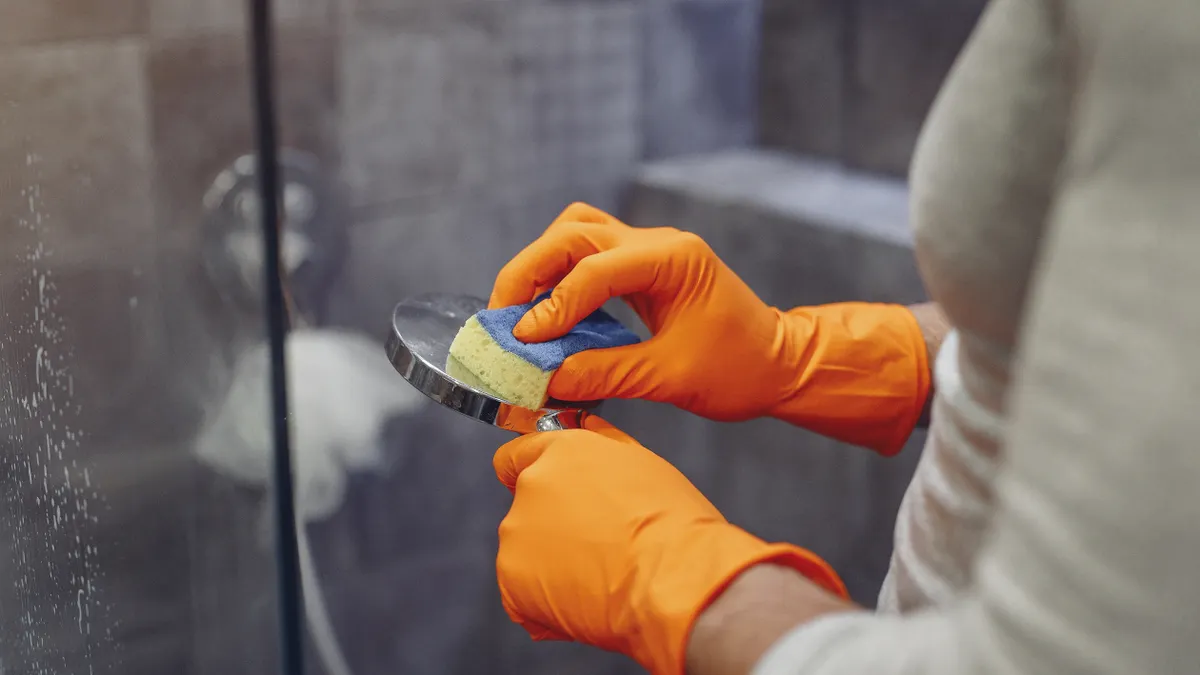
You remove hard water spots from frameless shower glass by softening the mineral film with vinegar, wiping it with a microfiber cloth, and repeating if needed before you reach for anything abrasive.
Because hard water spots usually show up where water dries first, they often appear strongest on the lower half of the glass. A slow, wet treatment can work better than dry scrubbing, but if the mark is old or the glass seems damaged, it is wise to consult a glass professional before using stronger methods. The CDC notes that cleaning is safest when you follow the product label, and the EPA advises using cleaners as directed.
If the spots are light, it may take one pass. If they’ve built up for months, expect 2 or 3 rounds.
- Rinse the glass with warm water for **30 seconds** to lift loose debris.
- Spray **white vinegar** on the spots or soak a microfiber cloth and press it against the glass for **5 to 10 minutes**.
- Wipe in straight lines, not circles, so you can see what changed and what didn’t.
- Rinse with clean water and dry with a dry microfiber cloth.
- If the mark remains, use a **glass-safe cleaner** made for shower glass and repeat once.
If the spot is stubborn, a pumice-free cleanser can help on mineral film that won’t budge with vinegar alone. Use a damp cloth, light pressure, and a small test area first. Do not use steel wool, green scrubbing pads, or anything gritty meant for tile.
The downside of vinegar is that it works best on fresh or moderate buildup. Old deposits may need more time, and if the glass is already etched, vinegar won’t restore the surface.
Soap scum on shower glass: what works and what backfires
Soap scum comes off with a nonabrasive cleaner, warm water, and steady wiping; harsh scrubbing usually just smears it around. The film is a mix of soap, body oils, and minerals, so it behaves differently from plain hard water spots.
Because soap scum builds up differently from hard water deposits, it often appears as a smeared haze rather than neat spots. It usually gathers near the middle of the panel where shampoo and body wash splash, then dries into a gray or milky film.
A good routine is boring, and that’s the point. It saves the glass.
- Spray a glass-safe cleaner over the whole panel.
- Let it sit for 1 to 2 minutes so it can break the film.
- Wipe with a clean microfiber cloth.
- Rinse if the label calls for it.
- Dry with a second microfiber cloth so the film doesn’t dry back on the glass.
Do not use a gritty bathroom powder unless the label says it is safe for glass and the mark is truly mineral buildup. A rough powder can haze the surface. A razor blade is also a bad first move on frameless shower glass, because one slip can leave a line you can’t wipe out.
Soap scum is one of the easier shower-glass problems to fix if you catch it early. If the glass still looks hazy after a full wipe-down and dry, the issue may be residue layered over old mineral buildup.
What’s the safest step-by-step method to clean shower glass stains?
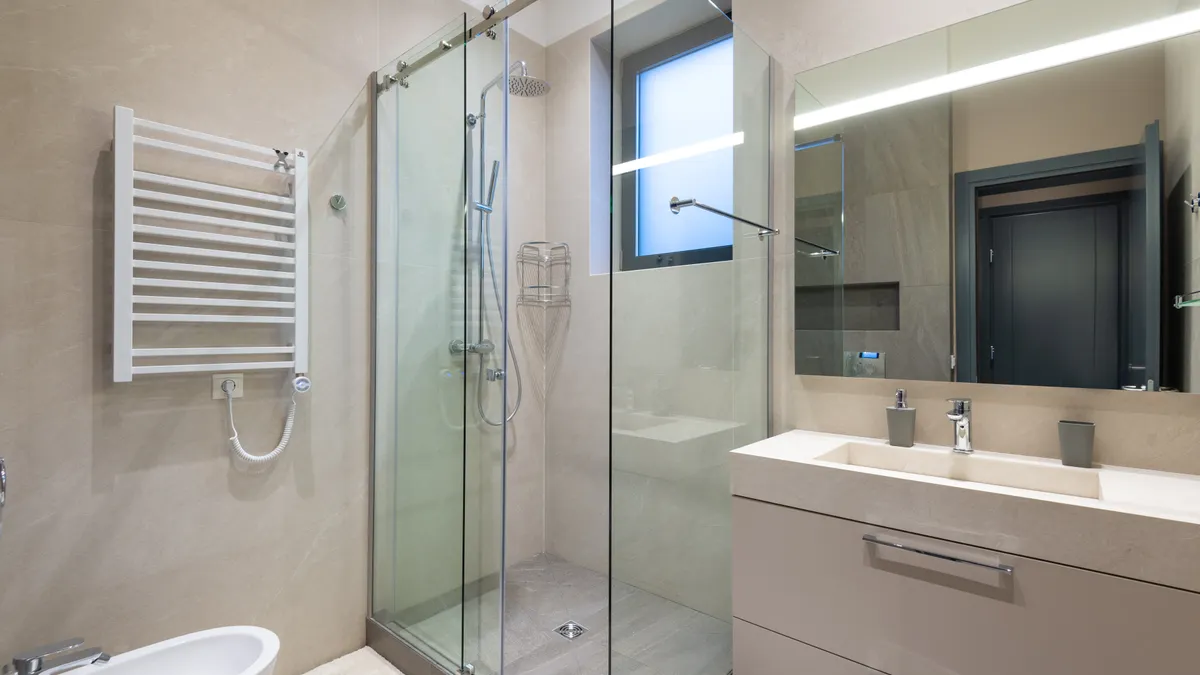
The safest step-by-step method is to start with water, move to vinegar or a glass-safe cleaner, then use a pumice-free cleanser only if the buildup still clings. That order cuts the risk of scratching the glass.
Because one cleaner often will not handle every type of buildup, a layered approach can give you a better shot without jumping straight to abrasion. It also keeps you from grinding debris into the surface with a pad that’s too rough.
- Rinse and inspect. Spray the panel with warm water and look at where the stain sits: high, low, or all over. A lower-panel pattern often means hard water.
- Apply a mild cleaner. Use white vinegar for mineral spots or a glass-safe cleaner for soap scum. Let it sit for 5 to 10 minutes.
- Wipe with microfiber. Use a folded cloth and straight strokes. The stain should fade instead of smearing.
- Treat stubborn areas again. Repeat once more before changing products. Two gentle passes are better than one aggressive one.
- Use a pumice-free cleanser only on what remains. Apply lightly, then rinse and dry.
- Finish with a squeegee. Pull water off the glass after cleaning so fresh spots don’t dry on the surface.
If a stain needs heavy pressure, that is a clue, not a challenge. It may be etched, or it may be a buildup layered with worn coating or hard mineral crust. Either way, forcing it usually makes the glass look worse.
How do you tell stain from etching on frameless shower glass?
You tell stain from etching by testing whether the mark changes with cleaning; a stain moves, softens, or disappears, while etching stays dull after repeated cleaning. That difference matters because the fix is not the same.
Because etching can look like a stubborn stain, it helps to compare a cleaned area with an untouched one. Etching is surface damage, often from long exposure to minerals or harsh cleaners, and it can look like frost or a permanent haze.
A simple check helps:
- Stain: looks spotty, streaky, or cloudy; often improves with vinegar.
- Etching: looks uniform, dull, or frosted; often feels unchanged after cleaning.
- Residue on top of damage: may improve some, but a dull patch remains underneath.
If you’re not sure, clean one small square about 6 inches by 6 inches with vinegar, then another with a glass-safe cleaner. Compare the results in bright light. A stain will usually show clear improvement. Etching won’t.
This is where many people waste time. They keep scrubbing a permanent mark and wear out the rest of the glass around it. The smart move is to stop chasing a perfect result when the surface itself has changed.
For deeper scratch-like marks, this page is not the right place to solve that problem. The scratch-care topic belongs to another guide.
What a bad cleaning job looks like, and how to avoid it
A bad cleaning job leaves streaks, scratched-looking lines, or a cloudy patch that gets worse after you clean it. If the glass looks cleaner at the top and foggier at the bottom, the product or method is wrong.
Here’s the catch: bad results usually come from too much force, the wrong pad, or a cleaner that leaves residue behind. The damage is often visible right away. A haze from soap film can be mistaken for scratches, and a scratched-looking surface can be the result of mineral grit dragged around with a dirty cloth.
Watch for these mistakes:
- Using a rough sponge on glass
- Scrubbing dry instead of wet
- Letting cleaner dry on the pane
- Mixing products without rinsing
- Wiping with a cloth that already has grit in it
A clean microfiber cloth matters because it picks up film instead of pushing it around. A squeegee matters because it stops new spots from drying in place. And timing matters too: if vinegar dries on the glass for too long, it can leave its own residue pattern if it isn’t rinsed.
A bad job also has a cost. You may spend an hour cleaning and still need a professional follow-up because the glass now shows streaks that weren’t there before. That is a waste of time, product, and patience.
When should you stop DIY stain removal and call a pro?
You should stop DIY stain removal when the glass looks etched, the buildup covers a large panel, or repeated cleaning doesn’t change the mark after two or three tries. At that point, the problem may be more than household residue.
Because some damage is beyond normal cleaning, a professional glass cleaner or restoration specialist may be the better next step. Even then, true etching may not fully disappear.
A pro call makes sense when:
- The mark is rough to the touch
- The glass has been stained for years
- You see damage near edges or hardware
- The panel has large, uneven dull patches
Do not assume every old mark can be erased. Some stains are removable, some are only reducible, and some are permanent surface changes. That honest line saves you from chasing a result the glass can’t give.
FAQ
how do you remove hard water spots from frameless shower glass?
Use white vinegar, a microfiber cloth, and a rinse. Spray or soak the spot for 5 to 10 minutes, wipe it, then dry the glass so the minerals don’t re-dry in place. If the spot still looks cloudy after two rounds, it may be stubborn buildup or the start of etching.
what is the difference between stain and etching?
A stain sits on the glass and changes with cleaning; etching changes the glass surface itself. If vinegar or a glass-safe cleaner improves the mark, it is likely residue or mineral buildup. If the glass stays dull and rough-looking after repeated cleaning, it may be etched.
can all stains be removed?
No, not all stains can be removed. Most hard water spots and soap scum can be improved or cleared with the right method, but etched glass and deep surface damage may stay visible. If a spot does not change after several gentle attempts, it is probably not a removable stain.
Drafted with AI; not yet reviewed by a person.