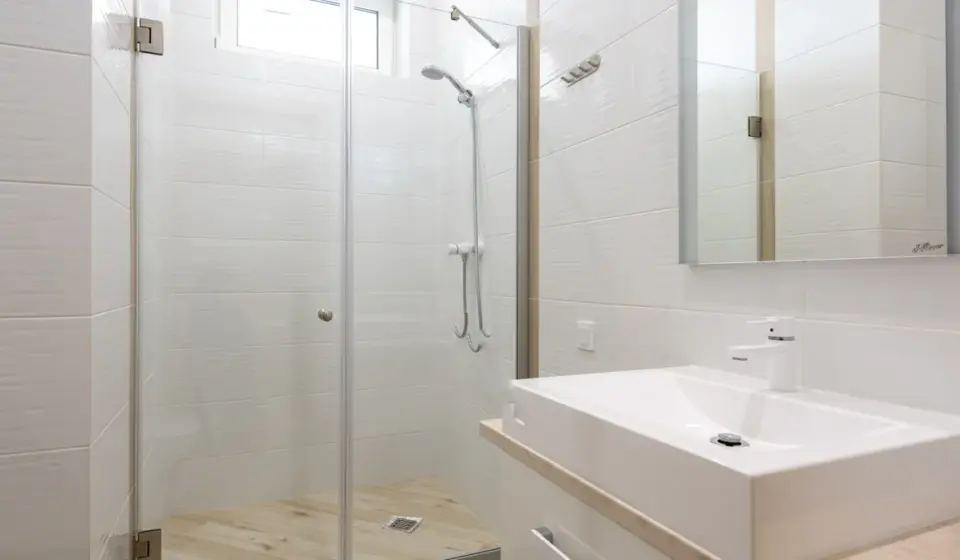

Last updated: November 15, 2026
Quick answer: 1 microfiber cloth is the first tool to use, and a shallow scratch may improve after 1 careful polishing attempt; deep grooves usually do not disappear. Light surface marks may improve with the right polishing compound and a microfiber cloth, but deeper scratches in the glass panel usually stay visible and may need replacement, as glass-care guidance from manufacturers such as Guardian Glass and Pilkington indicates.
Key takeaways
- First decide whether the mark is on the surface or in the glass itself.
- A microfiber cloth is the first tool to use; abrasive pads can make the damage worse.
- Polishing compound may help with very light marks, but it will not fix deep scratches.
- If the mark catches a fingernail or runs across a large area, replacement is more likely than repair.
- Prevention matters more than repair on frameless shower glass, because one bad scrub can add more damage.
- A quick check with side light takes only a few minutes.
What counts as a scratch on frameless shower glass?

A scratch on frameless shower glass is a line or groove that stays visible after normal wiping and looks different from water spots or soap film. True scratches usually have a dry, dull look and may feel rough under a fingernail, while residue often moves, smears, or changes when wiped with water.
That difference matters because the fix is not the same. Surface marks may respond to a gentle polish, but a groove in the glass panel will not disappear just because the surface looks cleaner. A useful first check is to wipe the area with a damp microfiber cloth, then look at it from 2 angles and under bright light from the side. If the mark changes shape or fades, it may be residue; if it stays in the same place, consult a professional before treating it as damage.
The common mistake is to assume every line is a scratch and start scrubbing hard. That usually costs more in the long run because abrasive pads can add fine marks that are harder to see at first. A better first move is simple inspection, not force. The page in the frameless shower glass cleaning and maintenance hub can help readers sort the mark before they touch the surface again.
How do you tell residue from damage?
A mark is more likely to be residue if it wipes, shifts, or changes with moisture; it is more likely to be damage if it stays fixed and has a sharp edge. That check takes only 1 microfiber cloth, a little water, and a few minutes of bright side light.
A practical way to sort the two is to look at the mark in this order:
-
Wipe the area with a clean microfiber cloth dampened with water only.
If the line softens or breaks up, the problem may be buildup, not a scratch. -
Inspect the same spot from the side.
A residue line often sits on top of the surface, while a scratch reflects light as a narrow groove. -
Run a fingernail lightly across the mark once.
If the nail catches clearly, the mark is more likely to be a real scratch than a stain or film, and a professional opinion is wise. -
Check the surrounding area for similar lines.
If there are several parallel marks, a previous abrasive pad or dirty cloth may have caused them.
The mistake to avoid here is using an abrasive pad as a test. Even one pass can turn a faint surface mark into a wider visible line. A second mistake is trying to guess from one angle only; frameless shower glass can hide or exaggerate marks depending on the light. Side lighting gives a better read than overhead light alone.
If the mark does not move after a water wipe and a microfiber pass, start thinking in terms of surface scratch care rather than cleaning.
Can you polish out light scratches?

Light scratches may respond to polishing compound, but only when the mark is shallow and limited to the surface. That is the narrow case where careful polishing can improve how the glass panel looks without making the damage worse.
This is the point where a lot of generic advice goes wrong. It treats all scratches the same, but deep grooves and light haze are not the same problem. Polishing works best when the line is faint, short, and hard to catch with a fingernail. If the scratch is obvious from across the room, polish is less likely to help enough to matter.
A cautious procedure looks like this:
-
Clean the area with water and a microfiber cloth so the polish does not drag grit across the surface.
You want a bare, dry spot before you start. -
Put a small amount of polishing compound on a clean microfiber cloth.
Keep the amount small; more product is not the same as more correction. -
Work the compound over the mark in light, even passes for a short time.
Stop if the cloth starts to drag or the spot looks hotter, hazier, or wider. -
Wipe away residue and inspect the area in side light.
Improvement should show as a softer, less visible line, not a new cloudy patch. -
Repeat only if the mark is still clearly shallow and unchanged except for appearance.
If the line stays sharp after the first round, stop before you make the area worse.
A polishing compound is not a cure-all, and that honesty matters. It may reduce the look of a light scratch, but it can also leave haze if overworked, so consult a professional if the mark does not respond cleanly. It is also the wrong choice for deep marks, because repeated polishing can waste time and make the surrounding area look uneven. The best result is often a small improvement, not a perfect disappearance.
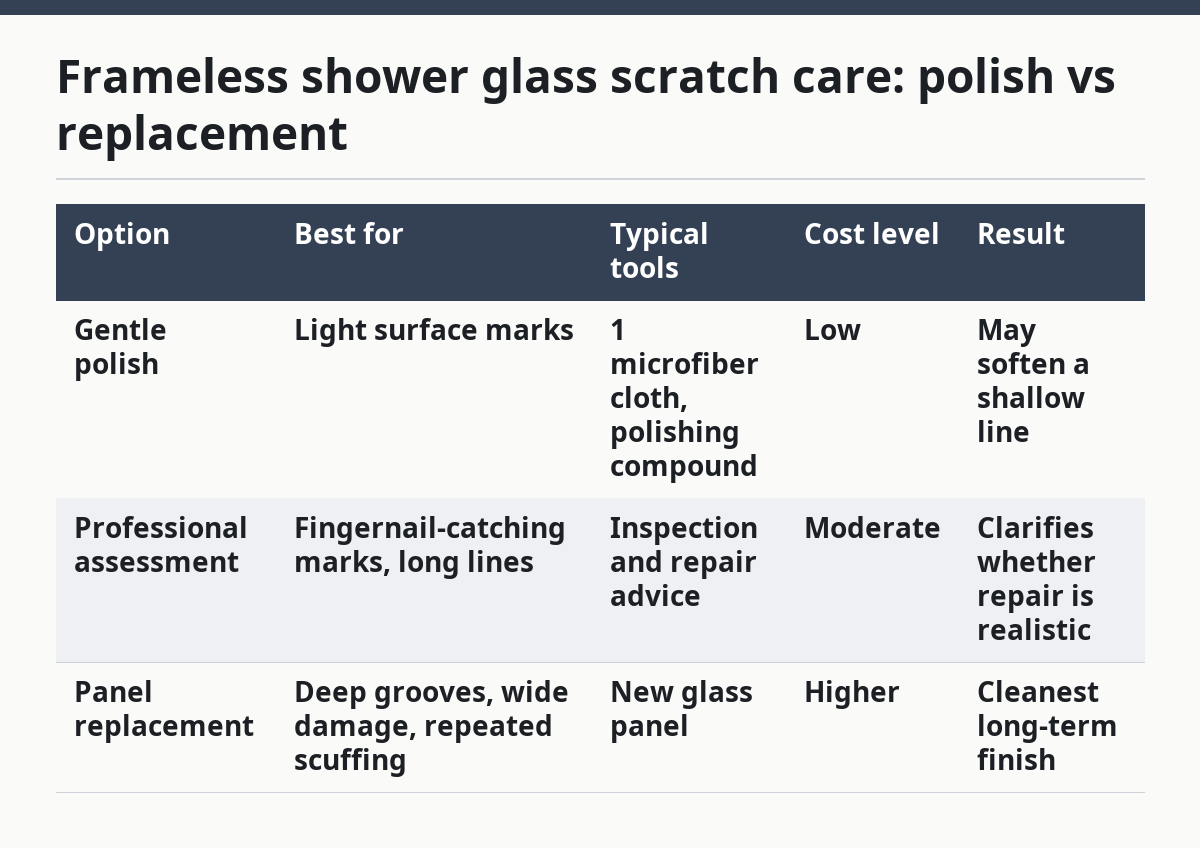
Frameless shower glass scratch care: polish vs replacement
| Option | Best for | Typical tools | Cost level | Result |
|---|---|---|---|---|
| Gentle polish | Light surface marks | 1 microfiber cloth, polishing compound | Low | May soften a shallow line |
| Professional assessment | Fingernail-catching marks, long lines | Inspection and repair advice | Moderate | Clarifies whether repair is realistic |
| Panel replacement | Deep grooves, wide damage, repeated scuffing | New glass panel | Higher | Cleanest long-term finish |
When is the scratch too deep to fix?
A scratch is too deep to fix when it remains sharply visible after gentle polishing, catches a fingernail clearly, or spans a large section of the glass panel. At that point, replacement is often the cleanest answer, although a professional can confirm whether partial repair is still worth trying.
This is the hard line people often want to avoid, because replacement costs more than a cloth and a compound. Still, there is a real trade-off: an aggressive repair attempt can create a larger visual defect or cloud the panel around the original line. That risk is higher when the mark is long, wide, or near eye level, because the human eye notices it fast in a bright bathroom.
Replacement is also the better call when the damage is not one isolated line but a network of fine marks. That pattern often comes from abrasive pads, dirty cleaning tools, or repeated scrubbing with the wrong side of a sponge. No polishing compound is likely to make that pattern vanish.
A simple rule helps here: if the mark still looks like a groove after one careful attempt at polish, stop. If it has not improved enough to justify the effort, the panel may be the wrong candidate for repair. That is not a failure. It is the point where trying harder stops being smart.
What should you avoid while cleaning?
You should avoid abrasive pads, gritty powders, and any tool that can drag hard particles across the frameless shower glass. Those products can turn a small mark into a larger field of fine scratches in 1 cleaning session.
The most common mistakes are easy to name:
-
Using abrasive pads on a dry panel.
This can leave visible scuffing across the surface. Use a microfiber cloth instead. -
Rubbing the same spot hard for a long time.
That can haze the area and make the finish look patchy. Short, light passes are safer. -
Dragging grit across the panel.
Mineral grit and dirt can act like tiny cutting tools. Rinse and wipe before any polishing attempt. -
Trying a new product on the whole panel first.
Test only a small section so one bad result does not spread. -
Mixing random products together.
That can leave a film that hides the scratch and makes the finish harder to read.
The cost of these mistakes is not just cosmetic. Once the surface is marked in several directions, it becomes harder to tell what is residue and what is actual damage. That makes later decisions about polishing or replacement much less certain. A cleaner, slower approach gives better information and usually less harm. For maintenance basics, the frameless shower glass cleaning and maintenance hub can help.
How can you prevent new scratches?
You can prevent new scratches by keeping abrasive material away from the panel and by using soft tools every time. A microfiber cloth is the right default tool, and an abrasive pad should stay out of the routine unless a product specifically calls for it.
Prevention works best when it is boring and consistent. Keep one clean cloth for wiping, another for drying, and do not let either one pick up grit from the floor or grout. If the cloth drops, rinse it before it touches the glass again. One dirty pass can undo several careful ones.
This is also where many people overclean. Frameless shower glass does not need hard pressure to stay presentable; it needs regular, gentle care. If a spot is stubborn, the problem may be buildup or residue, but that belongs to a different cleaning step, not more pressure. The more force used, the more likely a fine scratch becomes a visible one.
I recommend a simple habit: inspect the panel under side light once in a while and stop the first rough-looking mark before it spreads. That is a prevention step as much as a repair step. It keeps the panel easier to read, which makes later decisions about polishing or replacement much simpler.
What is the honest bottom line?
The honest bottom line is that light surface marks on frameless shower glass may improve, but deep scratches usually do not disappear. A microfiber cloth and a careful polish can help in the shallow case, while abrasive pads and hard rubbing often make things worse.
That means this topic is not really about “fixing glass” so much as deciding which kind of mark you are looking at. If it is residue, treat it as residue or consult a professional if you are unsure. If it is a shallow scratch, try polishing with caution. If it is a deep groove, replacement is often the cleanest outcome. That judgment saves time and prevents the common mistake of grinding a small problem into a larger one.
For readers who want the bigger care picture, the hub on frameless shower glass cleaning and maintenance sits above this topic and helps connect scratch care with the rest of the routine. If you need product selection help, our microfiber cloth guide and polishing compound guide may help.
Can scratches be removed from shower glass?
Light scratches may be reduced, but deep ones are usually permanent. A polishing compound and a microfiber cloth can help only when the mark is shallow and limited to the surface. If the line still catches a fingernail after a careful attempt, it is unlikely to disappear fully, and a professional review is the safer next step.
How can you tell if a mark is a scratch or residue?
A scratch stays fixed, while residue changes when wiped or when the light changes. Wipe the spot with water and a microfiber cloth, then look at it from the side in bright light. If the mark softens or moves, it is probably buildup; if it remains sharp, treat it as damage or ask a professional.
When is replacement the only option?
Replacement is the only sensible option when the line is deep, obvious, or spread across a large area. If polishing does not soften the mark and the surface still looks grooved, more repair attempts usually waste time and can make the panel look worse.
Drafted with AI; not yet reviewed by a person.



[…] Frameless shower glass repair usually falls into four practical choices: chip repair, seal replacement, hardware replacement, or panel replacement. […]