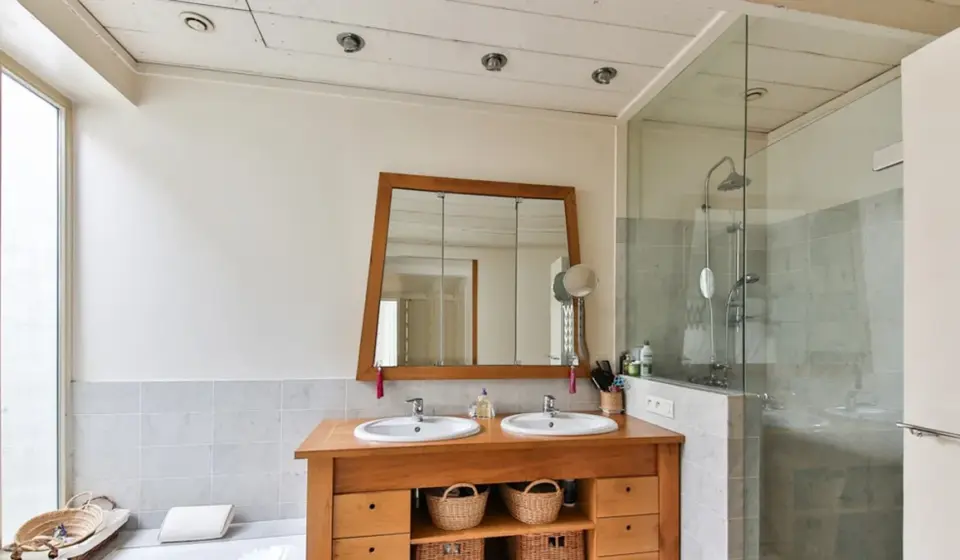

Hinged frameless shower doors swing on a fixed pivot, like a regular door, and need clear floor space to open. Sliding track doors hang the glass from rollers on an overhead track with a floor guide, saving floor space but adding a track and guide to clean. The better choice depends on your bathroom’s layout, not a universal “best” option.
Key takeaways
- Hinges pivot on a fixed axis; sliding track hangs the panel from rollers on an overhead rail.
- Hinged doors generally seal a little better at the pivot edge; sliding doors save floor space since nothing swings out.
- Tub/shower combos and tight floor plans usually favor sliding track; open walk-in showers usually favor hinged.
- Heavier glass and wider openings both need hardware rated for that specific weight and width — there is no single universal number, so always check the manufacturer’s spec sheet.
- Sliding systems need their overhead track and floor guide cleaned regularly to keep rollers moving smoothly.
How Do Hinged and Sliding Track Doors Actually Work?
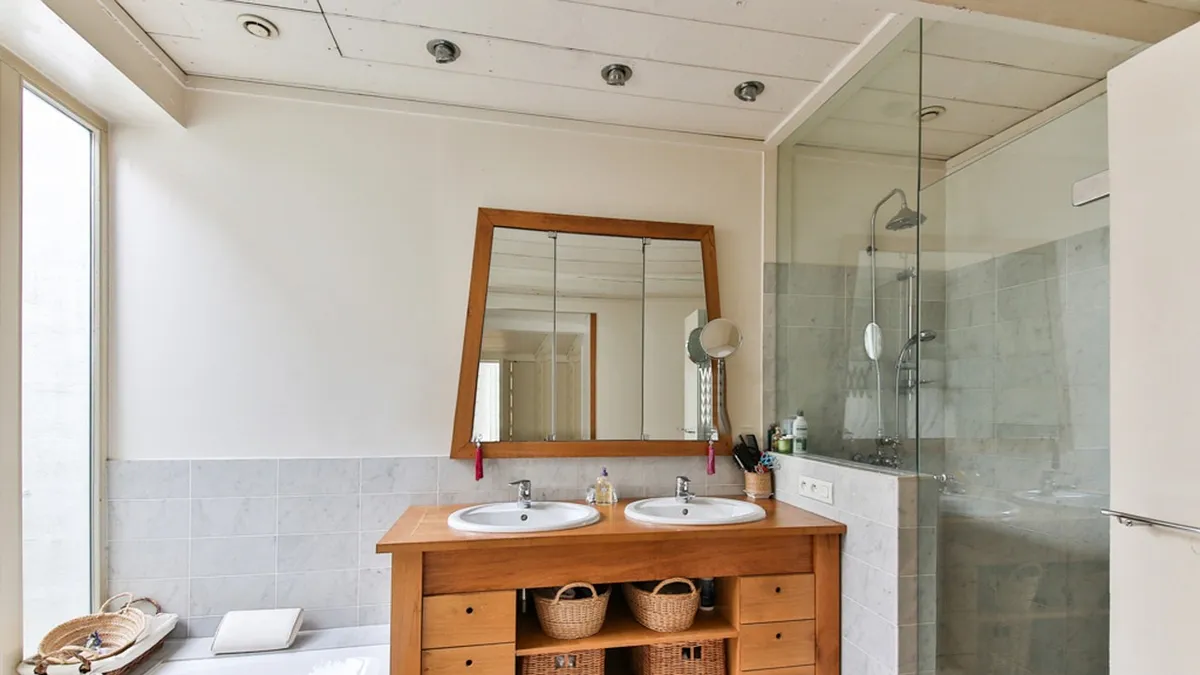
A hinged door is mounted on two or three wall- or glass-mounted hinges that let it swing on a fixed pivot point, the same basic mechanism as an interior door. Many shower hinges self-center and pull the door the last few degrees closed. A sliding track door instead hangs from rollers that run along an overhead track, with a bottom guide (a small channel or pin) keeping the panel aligned as it rolls side to side instead of swinging outward.
That mechanical difference drives almost every practical trade-off between them: a hinge is a single sealed pivot point, while a track system has a longer moving interface (the whole rail and guide) that needs to stay clean and aligned to roll smoothly.
Which Fits a Tub/Shower Combo or Tight Floor Space?
In a tub/shower combo or a small bathroom, there often isn’t room for a hinged door to swing fully open without hitting a vanity, toilet or the tub’s own curve. A sliding track door solves this because the panel moves sideways within the existing opening instead of swinging into the room. The trade-off is the overhead track and a floor guide, which add a small ledge to clean.
Which Fits a Spacious Walk-In Shower?
If the shower has room for a door to swing fully open, hinged is usually the simpler, better-sealing choice. There’s no overhead track to clean, and the hinge is a single, well-defined sealing point rather than a full rail. Walk-in showers built with accessibility in mind sometimes skip a door altogether or use the widest possible sliding opening instead, since hinged doors still require floor clearance to swing through even in a larger room.

Which Handles Heavier Glass Better?
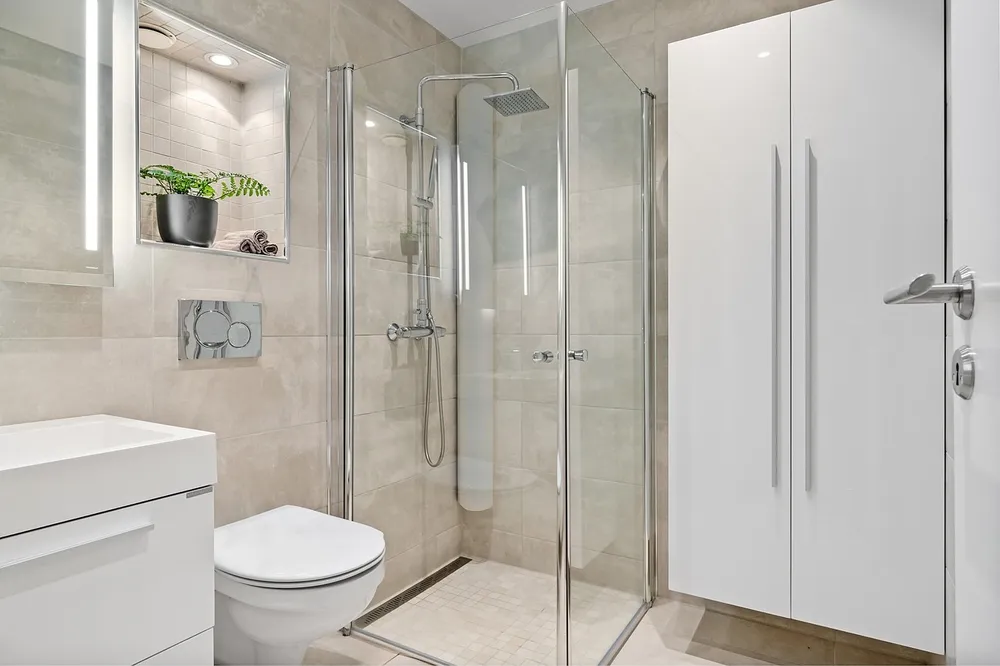
Heavier 1/2″ glass panels (about 6.5 lb per square foot, which can put a door over 100 lb — see glass thickness: 3/8″ vs. 1/2″ for the worked calculation) need hardware specifically rated for that weight and width, whether hinged or sliding. Exact hinge and track weight ratings vary by manufacturer and product line — there’s no single number that applies across brands, so treat any figure you see as “typical hardware manufacturer ratings, not a universal spec,” and confirm the exact rating on the spec sheet for the hardware you’re buying before ordering heavier glass.
Hinge and track mounting holes are drilled into the glass before it is tempered, and the wall anchors supporting either system carry real weight once the door is hung. That combination of precision drilling and load-bearing anchoring is a job for a licensed glass installer, not a DIY project — a mis-drilled hole or an under-anchored track can’t simply be patched afterward on tempered glass.
Which Is Easier to Keep Clean and Leak-Free?
Hinges tend to seal more tightly at the pivot edge because it’s a single fixed joint, while a sliding system’s floor guide and overhead track create a few extra places for water, hair and soap scum to collect. Neither style is “leak-free” by default since a frameless enclosure isn’t fully watertight by design — the actual bottom-gap tolerance and leak fixes are covered in frameless vs. framed shower door cost and the site’s other maintenance guides.
Decision Checklist: Match Your Bathroom
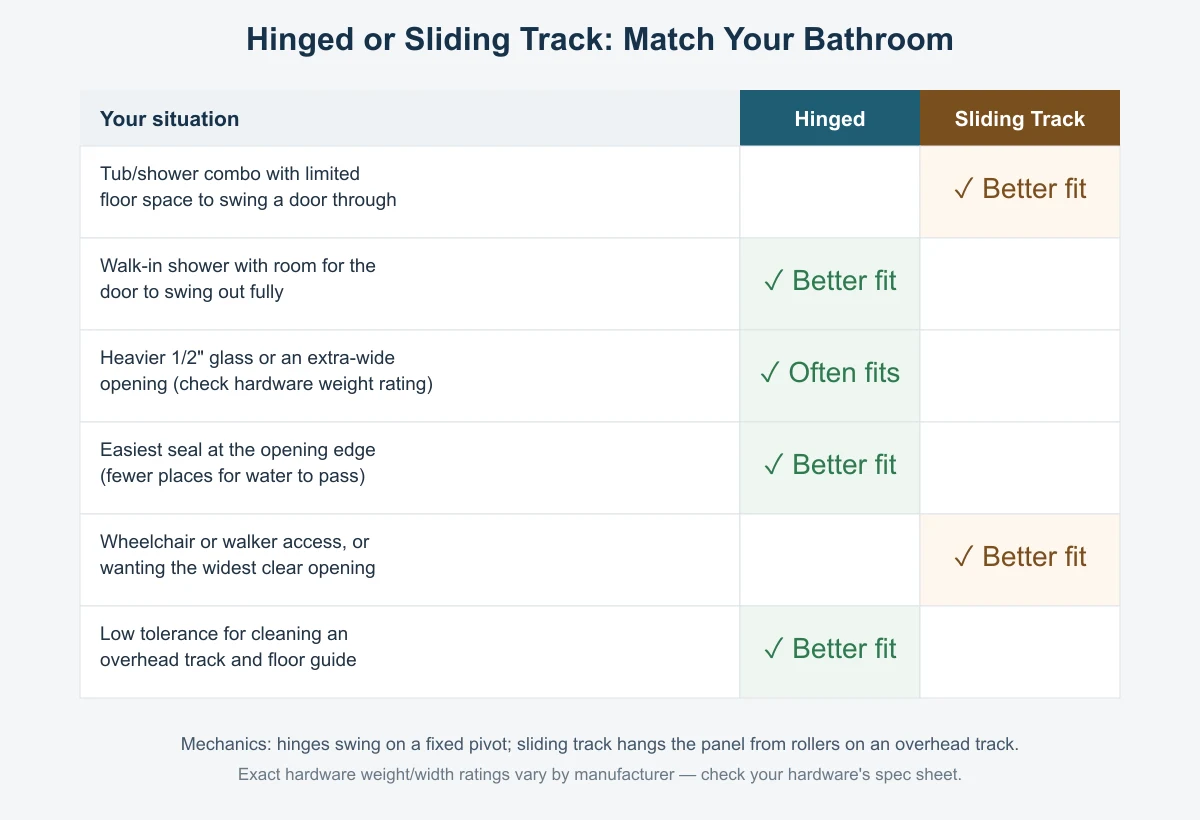
Use this table to match your situation to the hardware style that usually fits better. These are starting points, not universal rules — a bathroom can have more than one factor pulling in different directions.
| Your situation | Hinged | Sliding track |
|---|---|---|
| Tub/shower combo with limited floor space to swing a door through | Usually better fit | |
| Walk-in shower with room for the door to swing out fully | Usually better fit | |
| Heavier 1/2″ glass or an extra-wide opening (confirm hardware rating) | Often fits, if rated for it | Often fits, if rated for it |
| Priority on the tightest seal at the opening edge | Usually better fit | |
| Wheelchair/walker access or widest possible clear opening | Usually better fit | |
| Low tolerance for cleaning an overhead track and floor guide | Usually better fit |
For the full picture on choosing thickness, hardware and budget together, start with the frameless shower door guide.
Frequently Asked Questions
Is one type more expensive to install than the other?
It varies by hardware brand and configuration rather than by type alone. A heavier-duty hinge set for thick glass can cost as much as a comparable track system; get quotes for both on your specific opening rather than assuming one is always cheaper.
Can a sliding door be converted to hinged later, or vice versa?
Generally no, not without replacing the glass and hardware. Hinge holes and track mounting points are drilled or positioned for one hardware type during fabrication, and tempered glass can’t be safely redrilled afterward.
Do sliding doors leak more than hinged doors?
Not necessarily, but they have a different leak path (the floor guide and track) compared to a hinge’s pivot seal. Either style can leak if the seals, sweep or gap are out of spec, regardless of hardware type.
What maintenance does sliding hardware need that hinges don’t?
The overhead track and floor guide should be wiped out periodically to remove hair, soap scum and mineral buildup so the rollers keep moving smoothly. Hinges mainly need the pivot area kept clear of buildup and occasionally checked for looseness.
Can I mix hinged and sliding panels in the same enclosure?
Some configurations do combine a fixed panel with either a hinged or sliding operable section, but mixing two different operable hardware types (one hinged door and one sliding door) in the same opening is unusual and adds complexity. Ask your installer whether your specific layout supports it before assuming it’s an option.
Sources
- Singular Glass Hardware — Glass Weight Reference
- Glass Magazine (National Glass Association) — “Safe + Beautiful + Frameless”
framelessglassguide.com Editorial Team. Last updated: November 13, 2026.


[…] If you’ve replaced the sweep, confirmed the threshold slopes correctly toward the drain, and the leak is still showing up at the bottom edge, the glass panel itself may be out of plumb or set at the wrong height. That’s a mechanical fit issue, not a sealing issue, and it’s worth bringing in a licensed glass installer rather than trying another DIY pass. For background on how hinged versus sliding hardware handles the bottom edge differently in the first place, see our comparison of hinges versus sliding track systems. […]