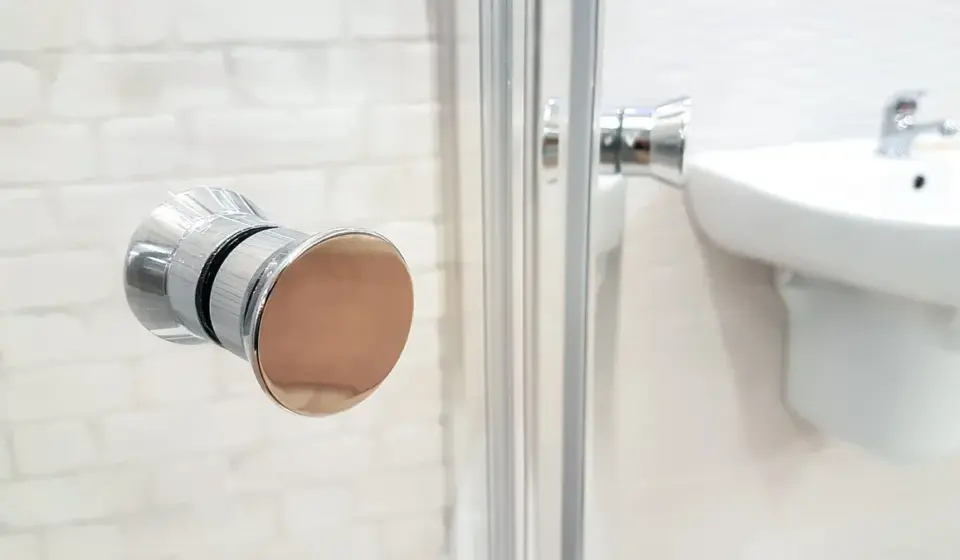

An easy-clean glass coating like EnduroShield or ClearShield is worth it mainly if your water is hard, you already squeegee but still fight buildup, and you’ll stick to gentle cleaners afterward. Every performance number in this article comes from the manufacturer’s own marketing or from independent consumer reviews — not from a neutral lab test, because no independent lab test was found.
Key takeaways
- EnduroShield’s “how it works” claims — the bonding mechanism, cleaning-time reduction and warranty lengths — are the manufacturer’s own statements, not independently verified performance data.
- Independent consumer reviews on ProductReview.com.au are split: about 53% positive and 47% negative across 112 reviews, for a 2.8-out-of-5 average.
- Common complaints in the negative reviews are spotting returning within a day, streaking that won’t buff out, and a shorter real-world lifespan than the warranty term implies.
- The coating cannot be removed by normal cleaning — only abrasion or strong acids take it off — which is good for durability but means a bad DIY application is hard to undo.
- Skip it if your water is already soft, you rely on strong descalers, or the glass is already etched or scratched; a coating doesn’t fix existing damage.
What does an easy-clean coating actually claim to do?
EnduroShield describes its coating as an ultra-thin layer — stated by the manufacturer to be only a few molecules thick — that chemically bonds to the glass surface rather than sitting on top of it. The goal is a hydrophobic, water-beading surface that’s meant to stop mineral deposits, soap scum and body-oil residue from bonding into the glass pores the way they do on untreated glass.
Every claim in this section is EnduroShield’s own description of its product, not an independent lab’s conclusion. That distinction matters for a coating that costs real money and time to apply, so it’s worth reading the rest of this article as “what the maker says” next to “what buyers report.”
What does EnduroShield claim about how long it lasts?
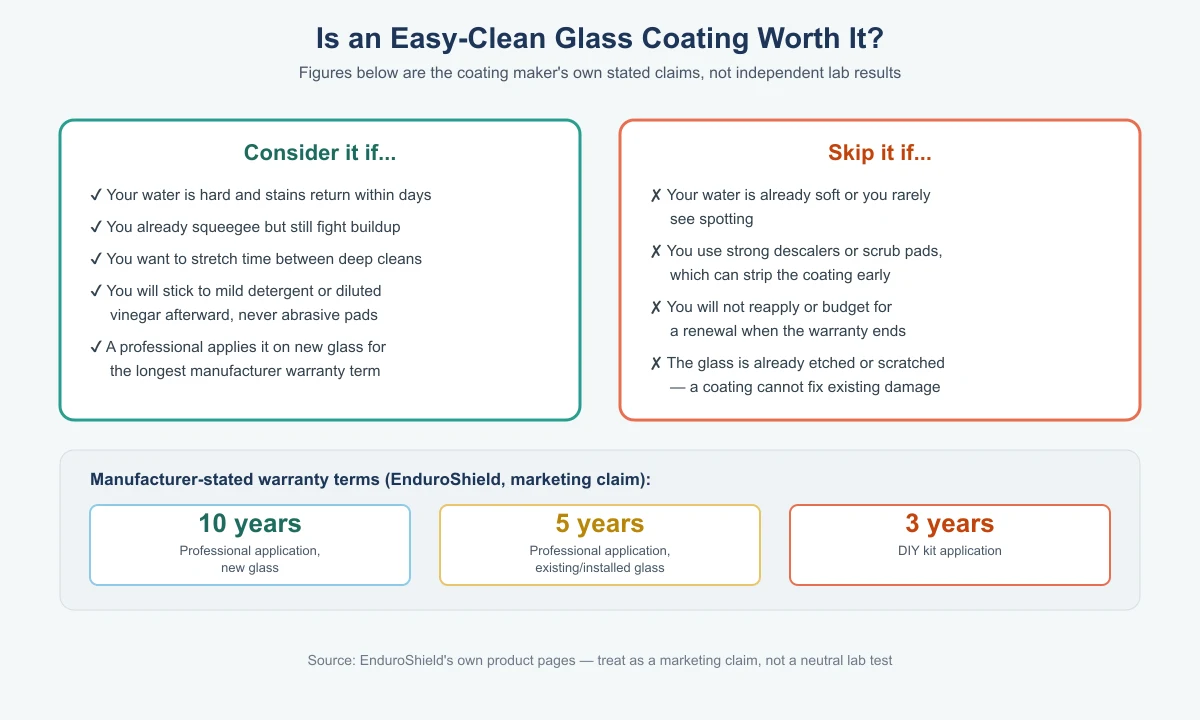
The manufacturer publishes three warranty terms, depending on how and where the coating is applied:
| Application | Manufacturer-stated warranty | Notes |
|---|---|---|
| Professional application, new glass | 10 years | Manufacturer cites TÜV Rheinland simulated-use testing for this figure |
| Professional application, existing/installed glass | 5 years | Shorter term for glass that wasn’t coated before installation |
| DIY kit application | 3 years | Shortest term; application quality depends on the installer |
These are the figures EnduroShield publishes on its own product pages — they are not something this article independently verified in a lab. Treat them as the ceiling the manufacturer is willing to warranty, not a guarantee of how the coating will perform in your specific bathroom.
What do independent reviews actually say?
Because every top search result for this question is either the manufacturer’s own site or a glass company that sells the coating as an add-on service, the manufacturer’s claims above are only half the picture. ProductReview.com.au, an independent consumer review platform not selling the product, lists 112 EnduroShield reviews at an average of 2.8 out of 5 stars — roughly 53% positive and 47% negative.
The split is informative. Positive reviewers who followed the application instructions carefully report real results: cleaning time cut noticeably and visible water-beading months later. Negative reviewers report the opposite experience on the same product: glass “covered in visible marks and spotting” within a day of application, streaking that doesn’t buff out, and a working lifespan far shorter than the multi-year warranty terms imply. Several reviewers also mention strong chemical fumes and difficulty buffing the coating evenly during application.
That split suggests application quality is doing a lot of the work. A rushed or uneven application seems to explain a meaningful share of the negative outcomes, which is also consistent with the manufacturer’s own emphasis on professional application for the longest warranty term.
Is it worth the cost — a plain breakdown
Weigh it against your actual water and habits, not the glossy “before and after” photos:
- Hard water + squeegee fatigue: if you already squeegee every shower and still fight stains within days, a properly applied coating addresses a real problem.
- Soft water or light use: if stains are rare already, you’re paying for a problem you don’t have.
- Cleaning habits after coating: the manufacturer states normal cleaning only needs a mild detergent or diluted white vinegar with a microfiber cloth. If you or whoever cleans your bathroom reaches for strong descalers or a scrub pad out of habit, that can strip the coating early — see our guide to removing hard water stains without damaging the glass for the safer cleaning order either way.
- Application source: professional application on new glass carries the longest warranty term the manufacturer offers; a DIY kit on glass that’s already installed carries the shortest.
When should you skip the coating entirely?
Skip it if any of these apply to you:
- Your water is already soft, or stains have never been a real problem.
- You know you’ll clean with strong descalers, bleach-based cleaners or an abrasive pad — any of these can strip or scratch a coating faster than normal use would.
- You won’t budget for reapplication once the warranty period passes; the coating doesn’t last forever, by the manufacturer’s own terms.
- Your glass is already etched, hazy or scratched — a coating changes the surface chemistry going forward, but it does not repair existing glass damage.
- You’re choosing glass thickness and hardware for a new install and haven’t settled that first — coating is worth revisiting once you know whether you’re coating new or already-installed glass, since that changes which warranty term applies.
FAQ
Is EnduroShield the same as ClearShield?
They’re both branded easy-clean glass coatings sold under this general category, and the research for this article verified EnduroShield’s own manufacturer claims specifically. Treat any other brand’s warranty terms and performance claims as that brand’s own statements until you’ve checked their source directly.
Can I apply an easy-clean coating myself?
Manufacturer-sold DIY kits exist and carry a shorter warranty term (3 years, per EnduroShield’s published terms) than professional application. Reviewer complaints about streaking and uneven results suggest the application technique matters as much as the product itself.
Does the coating stop hard water stains completely?
No source used for this article claims that, and independent reviews show mixed real-world results. The manufacturer frames it as reducing how easily minerals bond to the glass and cutting cleaning effort, not eliminating cleaning entirely.
What cleaner should I use once glass is coated?
EnduroShield’s own guidance is a mild detergent or diluted white vinegar with a microfiber cloth, and no harsh chemicals. Whenever bleach, vinegar or ammonia-based products are involved in any bathroom cleaning routine, never mix chlorine bleach with vinegar or ammonia — the fumes are hazardous.
Sources
- EnduroShield — How EnduroShield Protective Coatings Work (manufacturer)
- ProductReview.com.au — EnduroShield customer reviews
By framelessglassguide.com Editorial Team. Last updated: November 13, 2026.

[…] original clarity. If you have a factory or aftermarket easy-clean coating on your glass (see our guide to whether that coating is worth it), stick to the mildest effective concentration and don’t make acid treatments a daily habit […]
[…] answer: Most frameless shower glass stains can be removed in 2 to 3 gentle rounds with white vinegar, a glass-safe cleaner, and microfiber […]